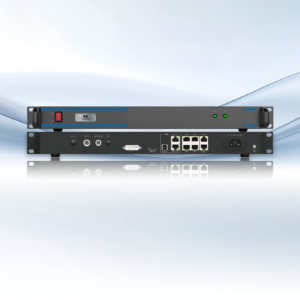
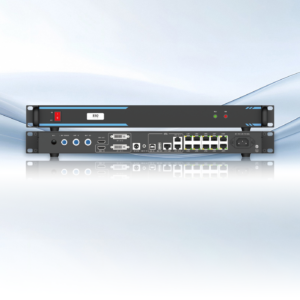
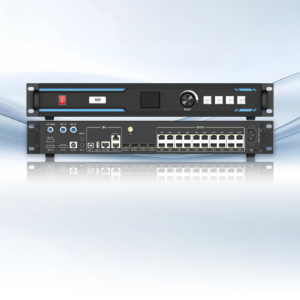
| Feature Focus | ES20 | ES10 | ES6 |
|---|---|---|---|
| Loading Capacity | 8.85 million pixels | 6.5 million pixels | 2.35 million pixels |
| Resolution Limit |
|
|
|
| Target Applications |
|
|
|
| Output Interfaces |
| Gigabit Ethernet Port*10 | Gigabit Ethernet Port*6 |
| Input Interfaces |
|
|
|
| Ethernet Port Backup | ✓ | ✓ | ✓ |
| 4K Input | ✓ | ✓ | – |
| 3D Function | ✓ | ✓ | – |
| Multi-unit Cascade | ✓ | ✓ | – |
| Audio Transmission | ✓ | ✓ | – |
Yes. LED displays cannot process standard video inputs such as HDMI directly. The sending card converts these signals into data that the receiving card in the LED cabinet can interpret.
➤ First, calculate your screen’s total pixel count to determine the necessary load capacity.
➤ Next, if the control room is located far from the screen, choose models equipped with 10G fiber optics.
➤ Finally, consider any specific requirements, such as support for 3D displays or redundant backup.
The ES Series LED sending cards support Ethernet ports backup. With a loop backup configuration, if the primary network cable is disconnected or damaged, the backup one will immediately take over without frame loss, ensuring uninterrupted performance.
No. With Kystar’s unlimited mapping function on supported models, engineers can connect LED cabinets in any order. The management software automatically maps the screen layout, reducing on-site configuration time.
Yes. The ES Series supports non-rectangular loading and custom resolution inputs. Whether you are building an ultra-wide curved display, a pillar screen, or an asymmetrical stage, our controllers provide pixel-perfect mapping without stretching or distortion.