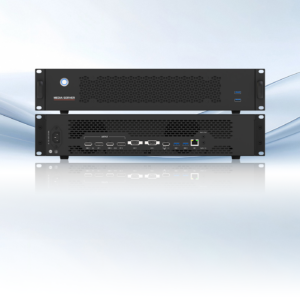
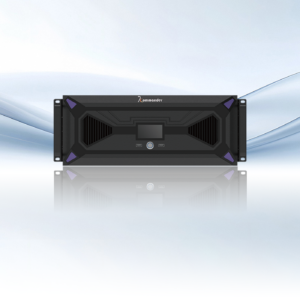
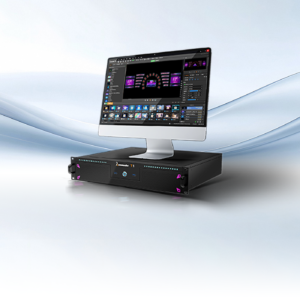
| Feature Focus | Kommander T Series | Kommander F Series | Kommander KT Series |
|---|---|---|---|
| Series Positioning | Engineered for Live Events & Portable Production | Heavy-Duty Power for Massive Fixed Installations | Heavy-Duty Power for Massive Fixed Installations |
| Target Applications | High-mobility stages, live capture, and rapid deployment. | 24/7 command centers, multi-screen splicing, and XR studios. | Standard digital signage, retail, and corporate boardrooms. |
| Processing Capabilities | Supports robust 8K decoding and multi-layer management. | Flagship multi-GPU architecture driving up to 16K ultra-high resolutions. | Reliable 4K point-to-point display and essential playback. |
| Key Advantages | Ultra-low latency inputs and portable flight-case options available. | Unlimited cascading via KFS synchronization for limitless canvas sizes. | High ROI with signature Kystar stability in a compact form factor. |
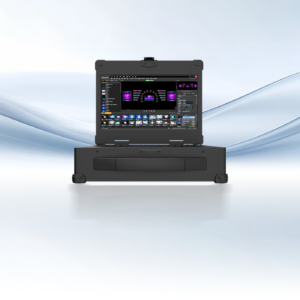
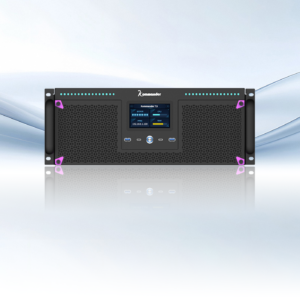
| Available Models |
|
|
|
➤ Choose the T-Series (e.g., T1, T3) for live events, touring, and stages. They offer extreme portability, flight-case options, and ultra-low latency live capture.
➤ Opt for the F-Series (e.g., F20, F30, F40) for massive fixed installations like command centers or XR studios. These multi-GPU powerhouses drive resolutions up to 16K.
➤ Select the KT-Series (e.g., KT1) for cost-effective, reliable 4K control in commercial retail and corporate boardrooms.
Image tearing usually occurs when the media server and the LED processors are running on slightly different clock signals. The Kommander series solves this with our proprietary Kystar Frame Synchronization (KFS) technology. By locking the server’s rendering engine and the downstream Kystar sending cards to a single, unified system clock, Kommander ensures absolutely flawless, zero-tearing playback, even when cascading multiple servers for a massive 16K or 32K canvas.
Yes. Unlike basic playback devices that force content into standard 16:9 formats, the Kommander software provides a limitless, timeline-based canvas. You can input the exact pixel dimensions of your custom LED wall and achieve perfect pixel-to-pixel mapping. This guarantees that your content is displayed without distortion, stretching, or loss of geometric accuracy.
The Kommander ecosystem is highly versatile and natively supports all mainstream video formats, including MP4, MOV, AVI, MKV, as well as high-quality uncompressed image sequences. Driven by full-process GPU hardware decoding, it easily plays extremely high-bitrate 8K files without stuttering, saving your team hours of pre-show transcoding. For layer-based effects, the timeline-based management software provides an unlimited creative canvas. It fully supports alpha channel transparency, unlimited Picture-in-Picture (PiP) layers, advanced projection blending, and seamless scene transitions, giving your visual team complete control over the final output.
No. Every Kommander LED media server comes fully integrated with Kystar’s powerful, proprietary control and playback software right out of the box. There are no hidden annual subscription fees, no watermarks, and no need to purchase expensive third-party software licenses. You get a complete, enterprise-grade hardware and software solution in one package.
➤ For remote control, you don’t need to be physically next to the server. The system supports LAN-based remote operation, allowing engineers to manage the media server from the Front of House (FOH) or a centralized control room.
➤ For backend scheduling, especially crucial for commercial displays and fixed installations (like our KT and F series), the software includes robust playlist automation. You can pre-program complex schedules, set specific times for videos to play, loop content, and automate scene transitions. This allows for reliable, 24/7 unattended operation, significantly reducing daily labor costs for retail and corporate users.